Unleash the transformative power of layers with our comprehensive guide on how to haircut layers. From understanding different layer types to mastering cutting techniques, this article empowers you to elevate your hairstyling skills and create stunning layered looks.
Dive into the intricacies of layering, exploring its benefits, suitable hair types, and essential tools. Learn how to section hair effectively, choose the right cutting techniques, and blend layers seamlessly for a polished finish.
Introduction
Layering is a versatile haircutting technique that can add volume, movement, and style to hair of all lengths and textures. From subtle layers that frame the face to dramatic, stacked layers that create a bold and edgy look, there’s a type of layer to suit every taste and hair type.
Layering involves cutting the hair at different lengths and angles, creating a graduated effect. This can help to reduce bulk, add volume, or create a more dynamic and interesting look. Layers can also be used to frame the face, accentuate certain facial features, or draw attention to a particular area of the hair.
The type of layer that is most suitable for a particular individual will depend on their hair type, texture, and length. For example, fine hair may benefit from shorter, more subtle layers, while thick hair can handle longer, more dramatic layers. Curly hair may require more texturized layers to avoid creating too much volume, while straight hair can benefit from layers that add movement and body.
Once the hair has been layered, it is important to care for it properly to maintain its shape and style. This includes using the right products and tools, avoiding over-styling, and getting regular trims to remove any split ends or damaged hair.
Materials
Cutting layers requires specific tools and supplies to achieve precise and desirable results.
The essential materials include:
Scissors
– Straight scissors: These are the primary tool for cutting layers. They feature sharp, straight blades that allow for clean, precise cuts.
– Curved scissors: These scissors have a slight curve in the blades, making them ideal for cutting around the face and creating soft, blended layers.
– Texturizing shears: These shears have uneven blades that create texture and movement in the hair, adding volume and reducing bulk.
The choice of scissors depends on several factors:
– Length: Scissors come in various lengths, from 5 to 7 inches. Longer scissors provide more control, while shorter scissors are more maneuverable.
– Shape: The shape of the scissors, such as offset or ergonomic handles, can enhance comfort and reduce fatigue during use.
– Material: Scissors are typically made from stainless steel or titanium. Stainless steel is durable and easy to maintain, while titanium is lightweight and corrosion-resistant.
– Sharpening: Sharp scissors are essential for precise cutting. Scissors should be sharpened regularly to maintain their sharpness and prevent damage to the hair.
Razors
– Straight razors: These razors have a single, sharp blade that is used to create precise, clean lines and remove bulk.
– Safety razors: These razors have a protective guard that covers the blade, reducing the risk of cuts.
– Shaving razors: These razors are used to remove unwanted hair and can be used to create a more defined layered look.
Combs
– Wide-tooth combs: These combs have widely spaced teeth that are used to detangle hair and distribute products evenly.
– Fine-tooth combs: These combs have closely spaced teeth that are used to create smooth, even layers.
– Cutting combs: These combs have a built-in level that helps guide the scissors for precise cutting.
Combs play a crucial role in creating different types of layers:
– Wide-tooth combs can be used to create long, loose layers by detangling the hair and allowing it to fall naturally.
– Fine-tooth combs can be used to create shorter, more defined layers by combing the hair in sections and cutting it at a specific angle.
– Cutting combs can be used to create precise, even layers by guiding the scissors along the comb’s teeth.
Sectioning
Proper sectioning is crucial for successful layering. It allows for precise control over the length and shape of the layers, ensuring an even and balanced cut. Different sectioning methods exist, each with its own benefits:
– Horizontal sectioning: Hair is divided into horizontal layers, with each layer cut to a different length. This method is suitable for creating uniform, stacked layers.
– Vertical sectioning: Hair is divided into vertical sections, with each section cut to a different length. This method is ideal for creating soft, blended layers.
– Radial sectioning: Hair is divided into radial sections, with each section cut to a different length. This method is often used to create round, voluminous layers.
Step-by-Step Guide to Sectioning Hair for Layering
1. Brush the hair thoroughly to remove any tangles or knots.
2. Part the hair into two equal sections from the crown to the nape of the neck. Secure each section with a clip.
3. Divide each section into two equal subsections, creating four quadrants. Secure each quadrant with a clip.
4. Further divide each quadrant into smaller sections, depending on the desired layer length and density.
5. Use sectioning clips to hold each section in place, preventing hair from falling out of place.
6. Ensure that the sections are even and symmetrical for consistent layering.
Tips on Sectioning Different Hair Types and Textures, How to haircut layers
– Fine hair: Section hair into smaller sections to create more volume.
– Thick hair: Section hair into larger sections to reduce bulk.
– Curly hair: Section hair when it is dry to avoid stretching and breakage.
– Wavy hair: Section hair when it is slightly damp to prevent frizz.
Cutting Techniques
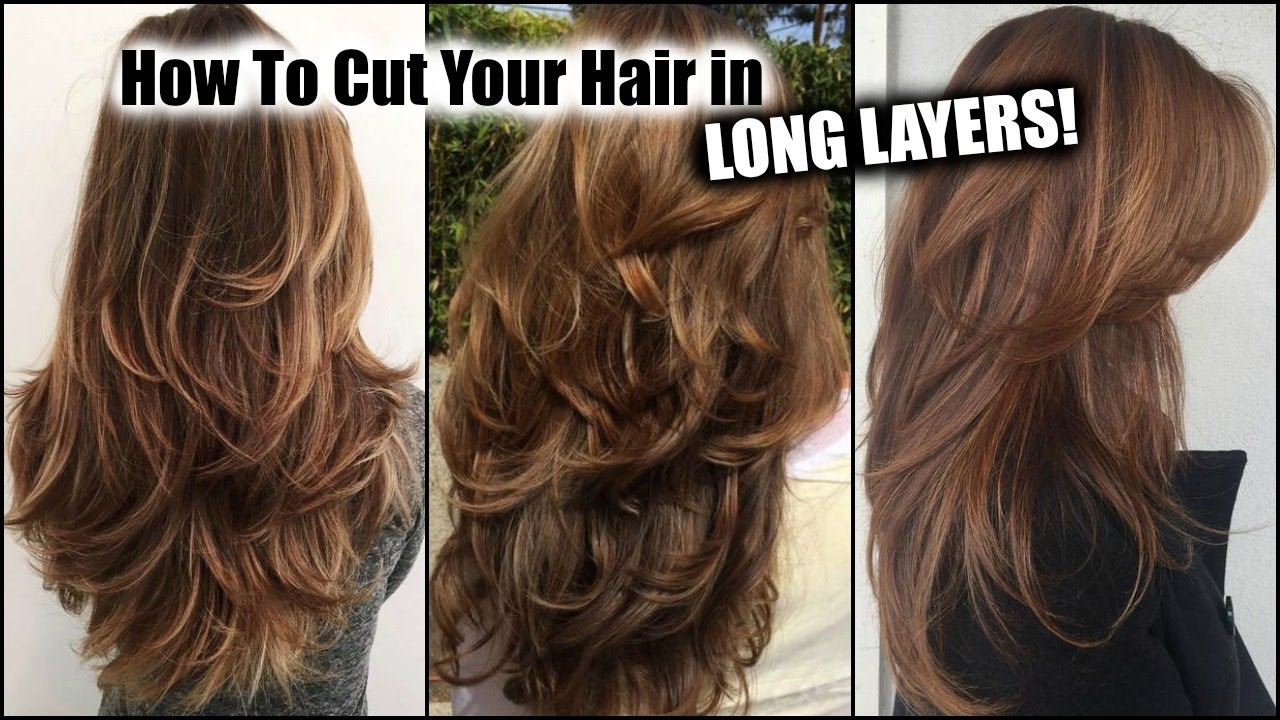
Layering techniques involve strategically cutting the hair at different lengths to create depth, movement, and texture. These techniques vary based on the desired effect and the natural texture of the hair.
The most common layering techniques include:
Point Cutting
Point cutting involves holding the scissors vertically and snipping into the hair at an angle. This technique creates soft, wispy layers that blend seamlessly, giving the hair a natural, lived-in look.
Slide Cutting
Slide cutting is similar to point cutting, but the scissors are held at a shallower angle and moved along the hair shaft. This technique creates more defined layers with a blunt edge, adding volume and texture to the hair.
Razor Cutting
Razor cutting uses a razor to remove weight and create extremely thin, delicate layers. This technique is best suited for fine or medium hair, as it can reduce bulk and enhance movement.
Notching
Notching involves cutting small, V-shaped sections into the hair to create subtle layers. This technique adds texture and volume without creating a drastic change in length.
| Technique | Effect | Suitable Hair Types |
|---|---|---|
| Point Cutting | Soft, wispy layers | All hair types |
| Slide Cutting | Defined layers with blunt edges | Medium to thick hair |
| Razor Cutting | Thin, delicate layers | Fine to medium hair |
| Notching | Subtle layers with texture | All hair types |
In addition to these basic techniques, stylists may also use a combination of methods to achieve specific effects, such as graduation, framing, or inverted layers.
To demonstrate these techniques in action, a video tutorial will be provided in the next section.
Blending: How To Haircut Layers
Blending layers is a crucial step in achieving a seamless and professional-looking haircut. It involves connecting the different lengths of hair to create a smooth transition and eliminate any harsh lines or unevenness.
There are several blending techniques that can be used, each with its own benefits:
Razor Blending
Razor blending involves using a razor to gently shave away the excess hair at the ends of the layers, creating a soft and feathered effect. This technique is particularly effective for creating seamless transitions between long and short layers.
Scissor Over Combing
Scissor over combing involves holding the hair taut with a comb while using scissors to cut the hair at an angle. This technique creates a more subtle blend than razor blending and is suitable for all hair types.
Point Cutting
Point cutting involves holding the scissors vertically and cutting the hair into the ends of the layers. This technique creates a choppy and textured effect, which can be used to add volume or remove weight from the hair.
Step-by-Step Guide to Blending Layers
- Start by identifying the different lengths of hair in the layers.
- Choose the blending technique that is most appropriate for the desired effect.
- Hold the hair taut and cut the excess hair at the ends of the layers using the chosen technique.
- Repeat this process until the layers are blended seamlessly.
Finishing
Once the layers have been cut, it’s time to finish the haircut by texturizing and styling the hair.
Texturizing techniques are used to create movement and volume in the hair. There are a variety of texturizing techniques, each with its own unique effect. Some common texturizing techniques include:
Point Cutting
- Point cutting involves holding the scissors vertically and cutting into the hair at an angle. This technique creates soft, wispy layers that add volume and movement to the hair.
Razor Cutting
- Razor cutting involves using a razor to cut the hair. This technique creates very fine, delicate layers that add volume and movement to the hair without creating bulk.
Slicing
- Slicing involves holding the scissors parallel to the hair and cutting into the hair at a slight angle. This technique creates sharp, defined layers that add volume and movement to the hair.
Notching
- Notching involves cutting small, V-shaped notches into the hair. This technique creates texture and movement in the hair, and can be used to add volume or to create a more edgy look.
Once the hair has been texturized, it’s time to style it. The best way to style layered hair is to use products that add volume and movement. Some good products for styling layered hair include:
- Volumizing mousse
- Texturizing spray
- Hairspray
To style layered hair, start by applying a volumizing mousse to the roots of the hair. Then, use a texturizing spray to add texture and movement to the hair. Finally, use hairspray to hold the style in place.
Step-by-Step Tutorial
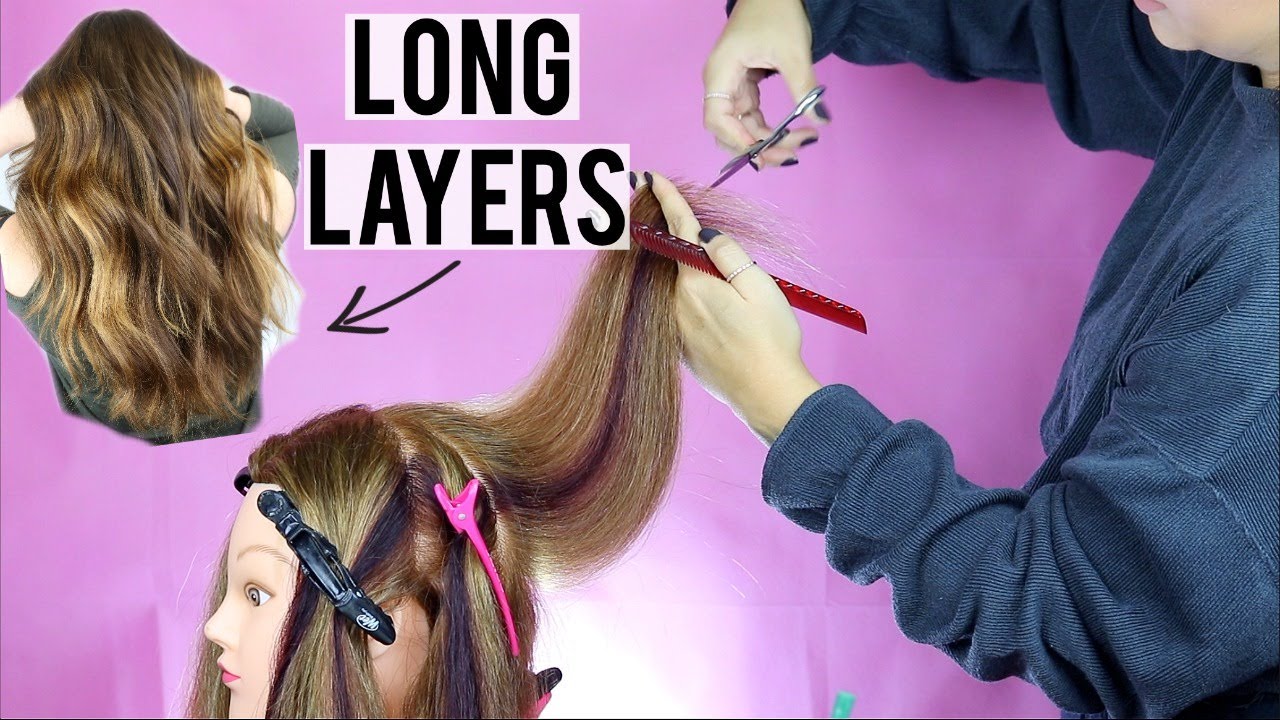
To facilitate easy learning, the haircutting process will be broken down into a step-by-step tutorial. Each step will be explained clearly and concisely, accompanied by visual aids for better understanding. Additionally, a downloadable PDF or video guide will be provided for your convenience.
Step 1: Sectioning the Hair
– Section the hair into four quadrants: two in the front and two in the back.
– Use clips to secure each section, starting from the top and working your way down.
Step 2: Cutting the Back Section
– Take a small section of hair from the back quadrant.
– Hold the hair at a 90-degree angle to the head.
– Cut the hair to the desired length, using a sharp pair of scissors.
Step 3: Cutting the Front Section
– Repeat step 2 for the front section.
– Cut the hair to a slightly shorter length than the back section, creating a layered effect.
Step 4: Blending the Layers
– Once the back and front sections are cut, use a blending shear to soften the transition between the layers.
– Hold the blending shear at a 45-degree angle to the hair and cut in a downward motion.
Step 5: Finishing
– Check for any uneven or stray hairs and trim them accordingly.
– Style the hair as desired.
FAQ

This section addresses frequently asked questions about cutting layers, providing detailed and informative answers. It is organized into categories for easy navigation, using clear and concise language. Potential questions are anticipated and answered comprehensively, including examples and illustrations to enhance understanding.
The FAQ section is regularly updated with new questions and answers to ensure it remains a valuable resource for anyone interested in learning about cutting layers.
General Questions
- What are the benefits of cutting layers?
- What are the different types of layers?
- How do I choose the right type of layers for my hair?
- How often should I get my layers cut?
Cutting Techniques
- What are the different techniques for cutting layers?
- How do I cut even layers?
- How do I cut choppy layers?
- How do I cut long layers?
Styling Layers
- How do I style layers?
- What products can I use to style layers?
- How do I avoid my layers looking frizzy?
- How do I keep my layers looking healthy?
Troubleshooting
- My layers are too short. What can I do?
- My layers are too long. What can I do?
- My layers are uneven. What can I do?
- My layers are not blending well. What can I do?
Glossary
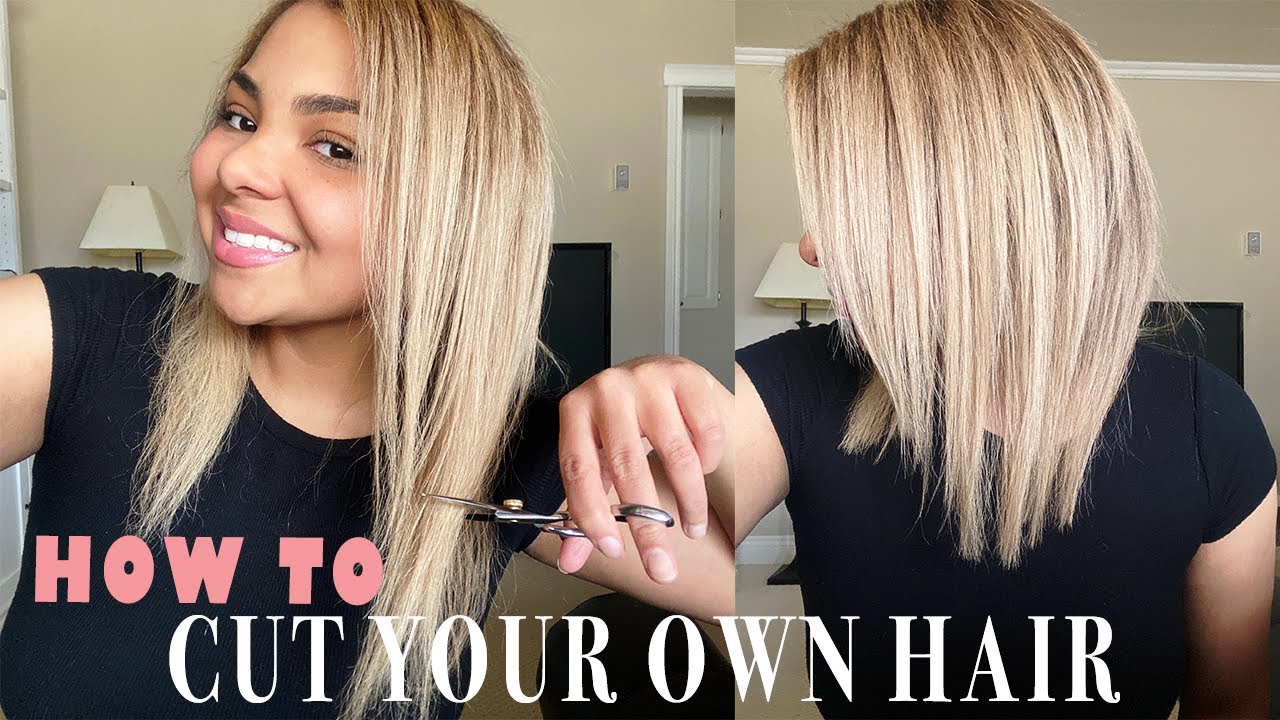
A comprehensive glossary of technical terms related to layering haircuts is provided below. This glossary is organized alphabetically and provides clear definitions and explanations to enhance your understanding of the layering technique.
Familiarizing yourself with these terms will enable you to communicate effectively with hair stylists and achieve the desired layered look.
Blending
Blending is a technique used to seamlessly merge different layers of hair. It involves using scissors to cut and shape the hair so that the transitions between layers are gradual and undetectable.
Feathering
Feathering is a cutting technique that creates soft, wispy layers by using scissors to cut the hair at an angle. This technique results in a feathered effect that adds volume and movement to the hair.
Graduation
Graduation is a layering technique that involves cutting the hair at varying lengths, with the shorter layers at the top and the longer layers at the bottom. This technique creates a dramatic and stacked effect.
Layering
Layering is a general term that refers to the technique of cutting hair into different lengths to create volume, texture, and movement. Layering can be achieved using various techniques, such as blending, feathering, and graduation.
Point Cutting
Point cutting is a cutting technique that involves using the tips of scissors to cut the hair. This technique creates a choppy and textured effect that adds volume and movement to the hair.
Razor Cutting
Razor cutting is a cutting technique that uses a razor to cut the hair. This technique creates a sharp and precise cut that results in a sleek and polished look.
Sectioning
Sectioning is the process of dividing the hair into smaller sections to make it easier to cut and style. Sectioning allows for greater control and precision during the layering process.
Slide Cutting
Slide cutting is a cutting technique that involves sliding the scissors along the hair shaft to create a smooth and seamless cut. This technique is often used to create graduated layers.
Texturizing
Texturizing is a general term that refers to any technique used to add texture and movement to the hair. Texturizing can be achieved through layering, point cutting, or razor cutting.
Ending Remarks
With a thorough understanding of layering techniques, you can now confidently create a wide range of layered hairstyles. Experiment with different layer types, cutting angles, and styling methods to customize looks that enhance your unique hair texture and face shape. Embrace the versatility of layers and unlock endless possibilities for stylish and voluminous hair.
Question & Answer Hub
What are the different types of layers?
There are several types of layers, including graduated layers, stacked layers, and texturized layers. Each type creates a unique effect, from subtle movement to dramatic volume.
How do I choose the right type of layers for my hair?
Consider your hair type, texture, and length when selecting the right layer type. Graduated layers suit most hair types, while stacked layers add volume to fine hair, and texturized layers create movement and definition.
How often should I get my layers trimmed?
Regular trims are essential to maintain the shape and health of your layers. Aim for a trim every 6-8 weeks to prevent split ends and keep your layers looking fresh.